
Retirement Education (U.S.)
Is a Gold IRA Safe? What U.S. Investors Should Know
A calm, trust-first guide to risks, protections, custody and storage rules, fees, and common scam red flags.
Published: 2026-02-02 · Last updated: 2026-02-02
Educational disclosure: This page is for general information only and is not financial, legal, or tax advice. See disclosures.

On this page
Introduction
For many U.S. retirement savers, “safe” means reducing nasty surprises. A Gold IRA can offer a more structured custody model than personal storage, but it is not risk-free. Safety depends on (1) compliant setup, (2) transparent fees in writing, (3) storage and custody controls, and (4) the behavior and pricing practices of counterparties.
New to the topic? Start here: Gold IRA basics.
How a Gold IRA works (safety overview)
A Gold IRA is generally a self-directed IRA structure that can hold certain IRS-eligible precious metals. The investor typically does not hold the metals personally while they remain inside the IRA.
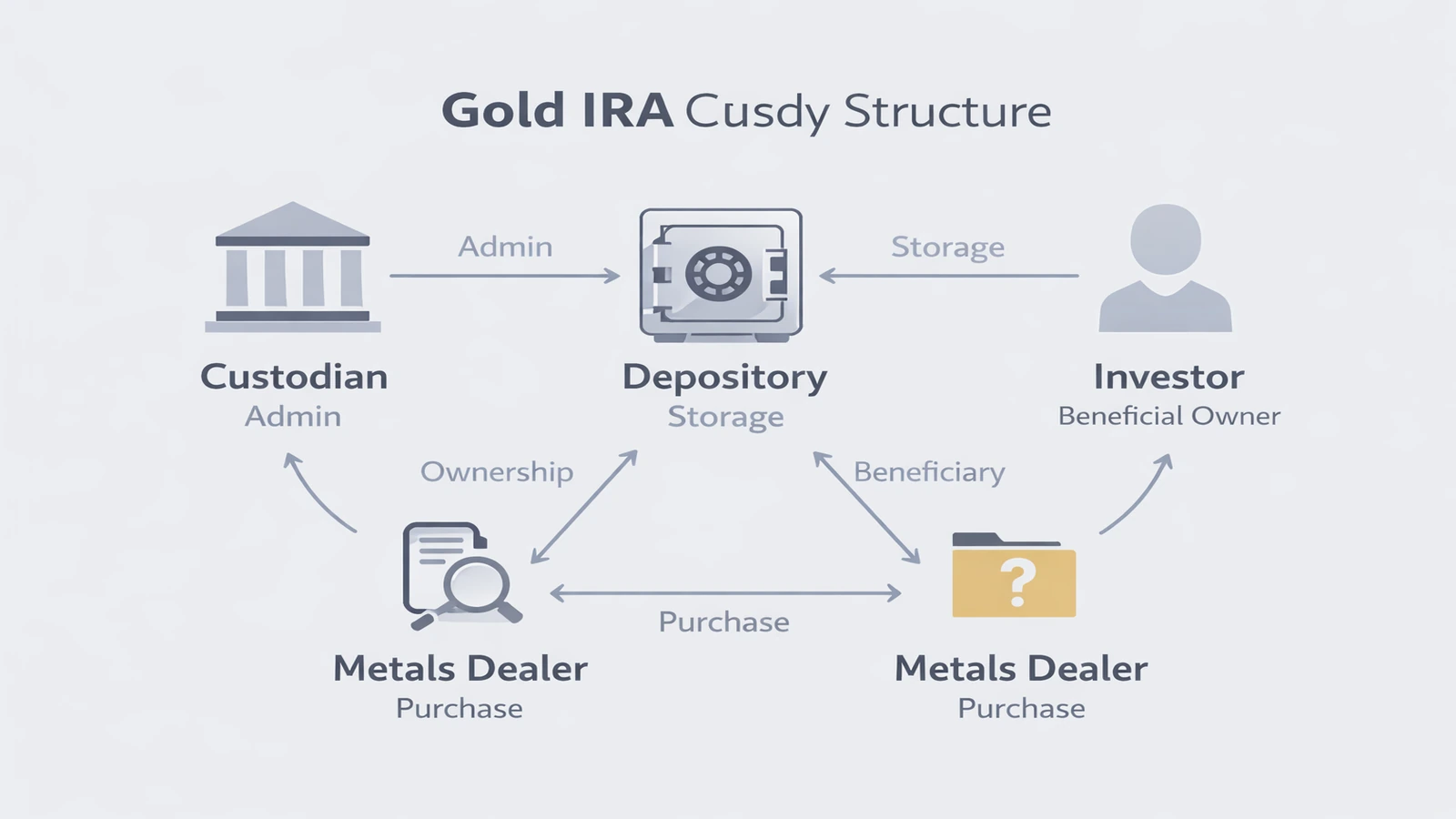
Custodian (account administration)
Every IRA needs an administrator (often called a custodian). The custodian maintains the account, handles reporting, and helps keep the IRA compliant. Learn more: custodian explained.
Storage (approved depository)
For physical metals held inside an IRA, storage is typically handled through an approved third-party facility. Storage rules and options vary (for example, segregated vs commingled). Learn more: storage explained.
Metals eligibility
The IRS restricts which metals may be held inside an IRA (purity standards and other requirements). High-level overview: IRS rules overview.
Rules and oversight (high level)
- IRA rules still apply: contributions, distributions, and reporting
- Prohibited transactions: “self-dealing” and personal possession while inside the IRA can create serious tax issues
- Documentation matters: written fee schedules and storage details reduce misunderstanding risk
If you’re doing a rollover, read: 401(k) to Gold IRA rollover steps.
Real risks to understand
Market volatility
Gold prices can rise or fall based on macro conditions. “Safe structure” does not mean “stable price”.
Fees and cost drag
Gold IRAs often carry ongoing fees (custodian + storage) and purchase/sale spreads. Over time, fees can materially affect outcomes. Start with: Gold IRA fees.
Liquidity and timing
Selling physical metals can be slower than selling publicly traded securities. Consider timelines and bid/ask spreads as part of “safety”.
Counterparty conduct
Provider behavior matters. High-pressure sales, vague pricing, or missing written disclosures are avoidable risks.
Common scams and red flags
- Urgency: “today only”, countdowns, repeated pressure calls
- Guaranteed outcomes: promised returns or “no risk” language
- Fear-first messaging: panic-based tactics instead of documented trade-offs
- No written transparency: unclear fees, storage terms, spreads, or liquidation process
Calm rule: if they won’t put it in writing, pause and compare elsewhere.
How to evaluate a provider safely
- Ask for an all-in written fee schedule (custodian + storage + other)
- Ask where metals are stored and what storage method applies (in writing)
- Ask how pricing is quoted (spreads/markups) for the exact metals purchased
- Ask how liquidation works (timeline, fees, and steps)
- Prefer education-first, low-pressure explanations
Ready to compare? Use a calm framework: best companies.
Who it may (and may not) be for
A Gold IRA may fit some diversification plans, but concentration risk is real. Many conservative approaches avoid large allocations to any single asset class without a clear rationale and liquidity plan.
Start with fundamentals first: Gold IRA basics.
Sources & references (official)
- IRS: Self-directed IRAs
- IRS Publication 590-A
- IRS Publication 590-B
- SEC: Investor bulletin on self-directed IRAs (fraud risks)
- CFPB: Retirement education
References are provided for education only. Verify details with official sources and qualified professionals for your situation.